Featured Post

How To Deal With Gaza After Hamas

Showing posts with label psychology. Show all posts

Tuesday, December 3, 2013

Science Defines Booty Calls, One-Night Stands

This is why it's so important to study science!

No! I am NOT being sarcastic this time ;-) 


Previously, Jonason had studied booty calls — or casual sexual relationships in which one party calls or texts the other for sex that day or evening — and found that they involve more emotion than one-night stands but are far less "touchy-feely" than long-term relationships. 

In the new research, Jonason surveyed 192 undergraduate students — 124 women and 68 men — at the University of West Florida. Each participant was asked to rank how likely booty calls, friends with benefits (people who have casual sex while remaining "just friends"), long-term relationships and one-night stands were to fulfill each of four functions: sexual gratification, social and emotional support, a "trial run" for a serious relationship and a placeholder to stave off boredom or to bide time until something better came along.

Read it all at Live Science 

Monday, May 27, 2013

Canadian study shows anxiety makes you less likely to get a job

A study by researchers from the University of Guelph in Canada discovered that job seekers who are anxious perform worse on job interviews, with the effects greater for men than women.

Deborah Powell, one of the study's authors, said anxiety during an interview can present itself in a number of ways, such as nervous tics, difficulty speaking and trouble coming up with answers, all of which are known to influence hiring outcomes.

Saturday, April 27, 2013

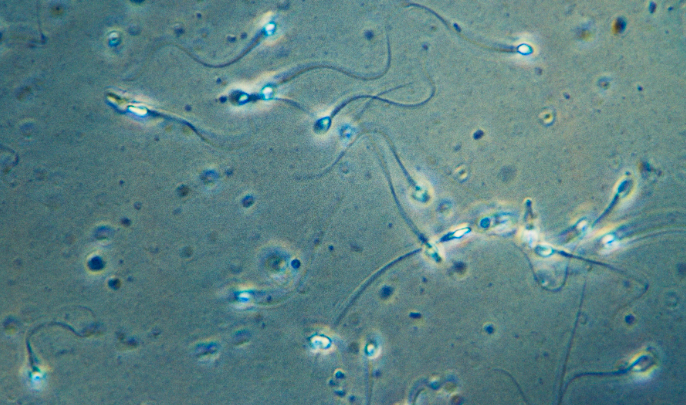
Jizz Caveat Emptor: Sperm buyers beware

For most men, a fantasy leading to arousal and orgasm is not the dream of being left alone in a mundane, nondescript office with a couple of posters of mass-produced, pedestrian art on the wall and a pornographic magazine for an inspirational boost.


But the sperm donor is an entirely different sort of guy.

A growing number of people; in some cases infertile couples, in others, women desperate to reproduce but lacking a male in their lives willing to father a child with them, have turned to the anonymous sperm bank donor for a solution.

But there's a major downside to that approach, aside from the obvious irritants of expense and invasive medical intervention in something that, for most of us, is a natural biological process.

There have been recent court cases highlighting some of the legal quandaries emerging from this relatively new phenomenon, but the consequences to sperm donation are often far worse.

As much as many social scientists would like to believe that personality and human characteristics are a consequence of environment and education, real science points to genetics as being the overwhelming factor in shaping our personalities.

So what kind of man chooses to go through a vetting process for the privilege of masturbating into a plastic cup and possibly passing his genes along in the form of a child he's never likely to meet, let alone have any personal involvement with?

Odds are, it's going to be a guy with some serious psychological problems. The kind of problems that are very likely to be passed along to the products of such conception.

That assertion outrages some women, particularly childless women in their mid-thirties to early forties who hear their biological clock winding down but don't want to be compelled to deal with a prospective father for the foreseeable future. These women often insist that sperm donors must be wonderful, altruistic men who are prepared to bestow an invaluable gift to those in need.

But try asking a sane man whether he would want to be an anonymous sperm donor. Almost invariably,  the response is a disgusted shake of the head and a loud "no!"  It's one thing, in jurisdictions where sperm donors are paid, for a drunk college kid to extemporaneously find a convenient way to continue a drinking binge. But to walk in dead sober and do what needs to be done requires a very peculiar personality-type. Narcissism combined with social maladjustment are a couple of the features that spring to mind, but not in as fun, or as smart a way as The Big Bang Theory. They are features one might not want to see in anyone's offspring, especially their own.

I know women that are still sceptics. Try asking them if the roles were reversed, would they anonymously donate an egg so that someone else could have one of her children; a child she would never see or hold or meet?  The typical first response is to point out how the medical procedure for egg collection is not comparable as it requires painful surgery. Fair enough.

But what if, hypothetically, the method for a woman was the same as for a man? What if all it required was for a woman to go in that room and stimulate herself to orgasm to cause an egg or two to cheerfully pop out of her into a sterile receptacle, never to be seen again, either in pre or post natal form. Would a psychologically balanced woman do it?

I think we all know the answer to that one.

And there are studies that confirm it. Offspring produced by sperm donation have a very high rate of psychiatric problems.

Apparently in China, they've found a way of improving the gene pool of sperm donors that is typical of that country's methodology since Chairman Mao. They force people to do it. 

But until we adopt that means, which we likely never will, it's worth considering that if nature doesn't want something to happen, maybe it shouldn't.

Sunday, January 1, 2012

Why psychology is considered less relevant than ever

Within the mental health field, a number of psychiatric hospitals are eliminating the Psychology Departments. The field itself has both some exceptional people and some absolute idiots practicing in it.

Psychology Today printed a recent article by a Monnica Williams (the two n`s in Monnica isn`t a type-o, it`s how she spells her name). She contends that `colorblindness` is a form of racism.

You can decide whether she`s one of the idiots.


ht Weasel Zippers

Wednesday, February 9, 2011

Social Scientist identifies liberal bias among social scientists!

Scientist discovers conservatives are an oppressed minority - at least in the Social Science field

SAN ANTONIO — Some of the world’s pre-eminent experts on bias discovered an unexpected form of it at their annual meeting. 

Discrimination is always high on the agenda at the Society for Personality and Social Psychology’s conference, where psychologists discuss their research on racial prejudice, homophobia, sexism, stereotype threat and unconscious bias against minorities. But the most talked-about speech at this year’s meeting, which ended Jan. 30, involved a new “outgroup.” 

It was identified by Jonathan Haidt, a social psychologist at the University of Virginia who studies the intuitive foundations of morality and ideology. He polled his audience at the San Antonio Convention Center, starting by asking how many considered themselves politically liberal. A sea of hands appeared, and Dr. Haidt estimated that liberals made up 80 percent of the 1,000 psychologists in the ballroom. When he asked for centrists and libertarians, he spotted fewer than three dozen hands. And then, when he asked for conservatives, he counted a grand total of three. 

“This is a statistically impossible lack of diversity,” Dr. Haidt concluded, noting polls showing that 40 percent of Americans are conservative and 20 percent are liberal. In his speech and in an interview, Dr. Haidt argued that social psychologists are a “tribal-moral community” united by “sacred values” that hinder research and damage their credibility — and blind them to the hostile climate they’ve created for non-liberals. 

“Anywhere in the world that social psychologists see women or minorities underrepresented by a factor of two or three, our minds jump to discrimination as the explanation,” said Dr. Haidt, who called himself a longtime liberal turned centrist. “But when we find out that conservatives are underrepresented among us by a factor of more than 100, suddenly everyone finds it quite easy to generate alternate explanations.” 

The entire article is at The New York Times