Featured Post

How To Deal With Gaza After Hamas

Showing posts with label book reviews. Show all posts

Monday, May 28, 2012

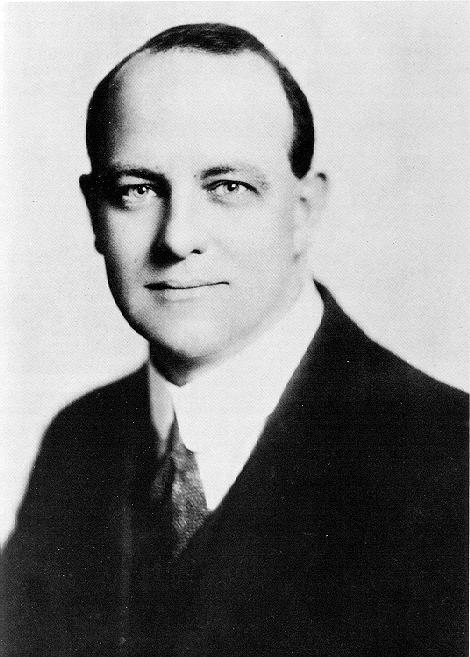
The Atlantic's review of P. G. Wodehouse: A Life in Letters

IN SEPTEMBER OF 1936, six months after Germany’s reoccupation of the Rhineland, P. G. Wodehouse published a story titled “Buried Treasure.” This short tale begins with a conversation among pub-goers:
The situation in Germany had come up for discussion in the bar parlour of the Angler’s Rest, and it was generally agreed that Hitler was standing at the crossroads and would soon be compelled to do something definite. His present policy, said a Whisky and Splash, was mere shilly-shallying. “He’ll have to let it grow or shave it off,” said the Whisky and Splash. “He can’t go on sitting on the fence like this. Either a man has a moustache, or he has not. There can be no middle course.”
Five years later, Wodehouse, residing at a posh hotel in Berlin, agreed to write and transmit a series of broadcasts for German radio about life as an internee. His hosts’ objective was to score a propaganda victory in the officially neutral United States, where Wodehouse’s books were extraordinarily popular. In the first broadcast, he said:
Young men, starting out in life, have often asked me, “How can I become an Internee?” Well, there are several methods. My own was to buy a villa in Le Touquet on the coast of France and stay there till the Germans came along. This is probably the best and simplest system. You buy the villa and the Germans do the rest.
In the half decade between the fictional conversation at the Angler’s Rest and his light-as-a-feather account of his own experiences, Wodehouse had, as he noted, experienced the German invasion of France, the loss of his house in that country, the separation from his wife and beloved dogs, and internment in Belgium and Germany. What ensued was a sustained public campaign against his “traitorous” behavior in the English press and Parliament, and his decision, once the war culminated, to permanently relocate to the United States.

Read the rest at The Atlantic

Tuesday, February 22, 2011

Martin Amis: 'If I had a serious brain injury I might well write a children's book'

Best-selling, critically acclaimed British author Martin Amis has offended children's literature authors with his recent comments in an interview on BBC TV.

"People ask me if I ever thought of writing a children's book," Amis said, in a sideways excursion from a chat about John Self, the antihero of his 1984 novel Money. "I say, 'If I had a serious brain injury I might well write a children's book', but otherwise the idea of being conscious of who you're directing the story to is anathema to me, because, in my view, fiction is freedom and any restraints on that are intolerable."  
"I would never write about someone that forced me to write at a lower register than what I can write," he added.  
But in an angry blog response on her website, author Lucy Coats, whose books include the Greek Beasts and Heroes series and novel Hootcat Hill, called Amis's remark "arrogant twaddle" with an "implicit insult to those of us who do write children's books".  
And writer Jane Stemp, whose book The Secret Songs was shortlisted for the 1998 Guardian children's fiction award, and who has cerebral palsy, said: "I have brain damage ... So Amis couldn't have insulted me harder if he'd sat down and thought about it for a year. Superglueing him to a wheelchair and piping children's fiction into his auditory canal suddenly seems like a good idea."


h/t macleans.ca

Sunday, January 9, 2011

An idea isn't a good one unless you share it

From a Scientific American review of Steven Johnson's book, Where Good Ideas Come From: The Natural History of Innovation


Protecting our ideas from others may mean they never see the light, according to Steven Johnson in his new book, Where Good Ideas Come From. By sharing these thoughts, however, we can connect with our peers and contribute to powerful networks that “shape the flow of information and inspiration.” Take the invention of GPS. This handy navigation system was originally invented because scientists were trying to determine the precise location of the Russian satellite Sputnik at any moment as it traveled.  
Johnson argues that although we tend to think that good ideas emerge from our mental prowess, our environment provides an equally crucial influence. If we isolate ourselves from the intellectual influence of others, good ideas rarely develop. Johnson illustrates this point by discussing research by psychologist Kevin Dunbar, who studied how scientists work in the laboratory. Dunbar set up cameras to watch and listen in and found that the most important ideas were not generated by individuals but by groups of scientists who exchanged information in lab meetings. 
Johnson also tells us that eureka moments are rare. The best new ideas develop by gradually adding bits of complexity to older ideas. For instance, the Web has become increasingly complex since it was invented 20 years ago. From just a few thousand Web sites, the network has ballooned to more than 100 million sites with 25 billion pages of information.